
Colorado's Front Range is one of the most hail-prone regions in the country, and most of our severe hail falls from late spring through summer. A single storm can damage thousands of roofs in an afternoon, but many homeowners don't find out until a leak appears months later, sometimes after the window to file an insurance claim has narrowed.
Start on the ground: signs you can check safely
Please don't climb onto your roof, especially right after a storm. You can learn a lot from the ground:
- Dented gutters and downspouts. Soft aluminum shows hail impacts clearly. If your gutters are dented, your roof was hit too.
- Dings on roof vents and flashing. Metal vents on the roof often show round dents you can spot from the yard.
- Granules at the downspouts. A pile of dark, sand-like granules at the bottom of a downspout after a storm often means hail knocked them off your shingles.
- Damage to siding, screens, and windows. Cracked or chipped siding, torn window screens, and dented window wraps point to a hail strike on that side of the house.
- Other clues around the property. Dented outdoor AC units, damaged patio furniture, dented mailboxes, or dings on vehicles left outside.
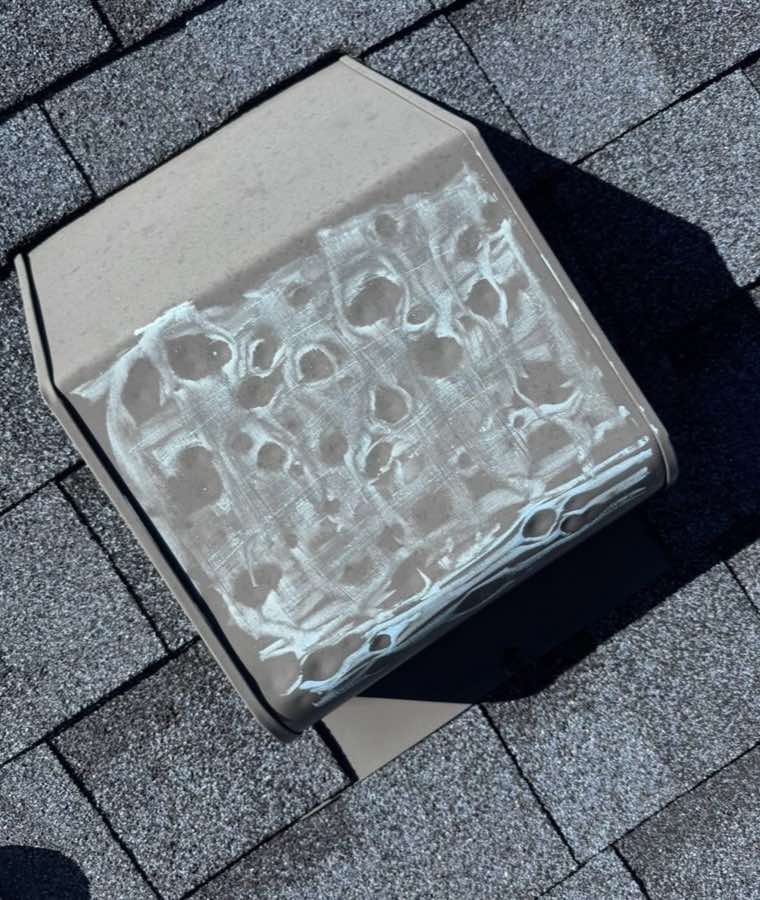
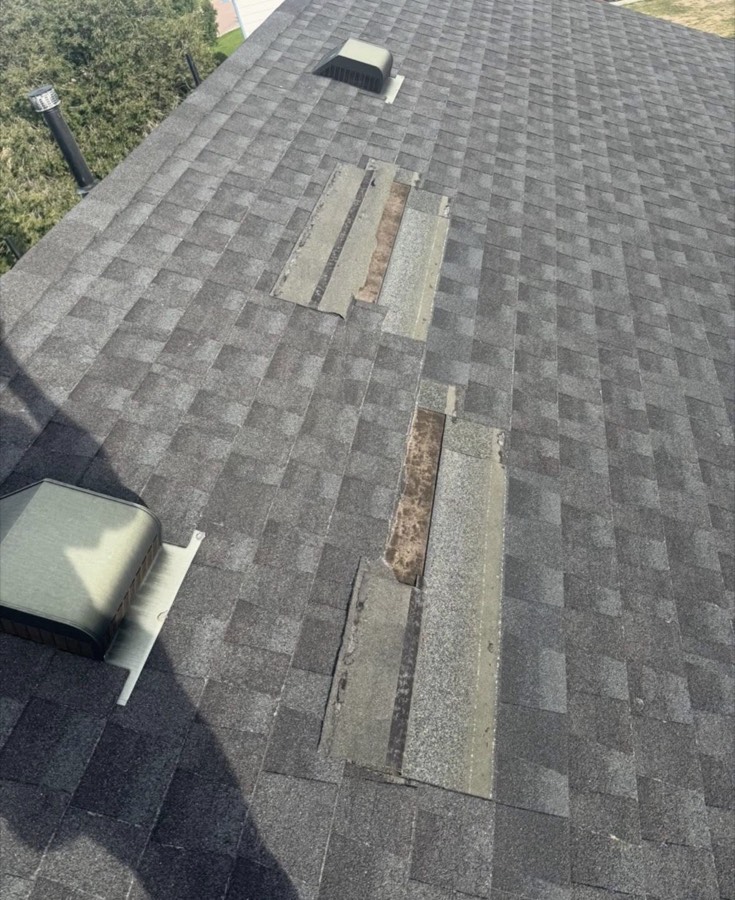
What a roofer looks for up close
During an inspection, a roofer checks each slope of the roof for:
- Bruising: round dark spots where granules have been knocked loose. They often feel soft, like a bruise on an apple.
- Exposed mat: impacts that strip granules down to the shingle's underlying mat, which then breaks down in the sun.
- Cracks and fractures in shingles, especially on older, more brittle roofs.
- Wind damage: creased, lifted, or missing shingles, and broken seal strips that let shingles flap in the next storm.
- Damaged accessories: dented vents, cracked pipe boots, and damaged flashing, which are common leak sources.
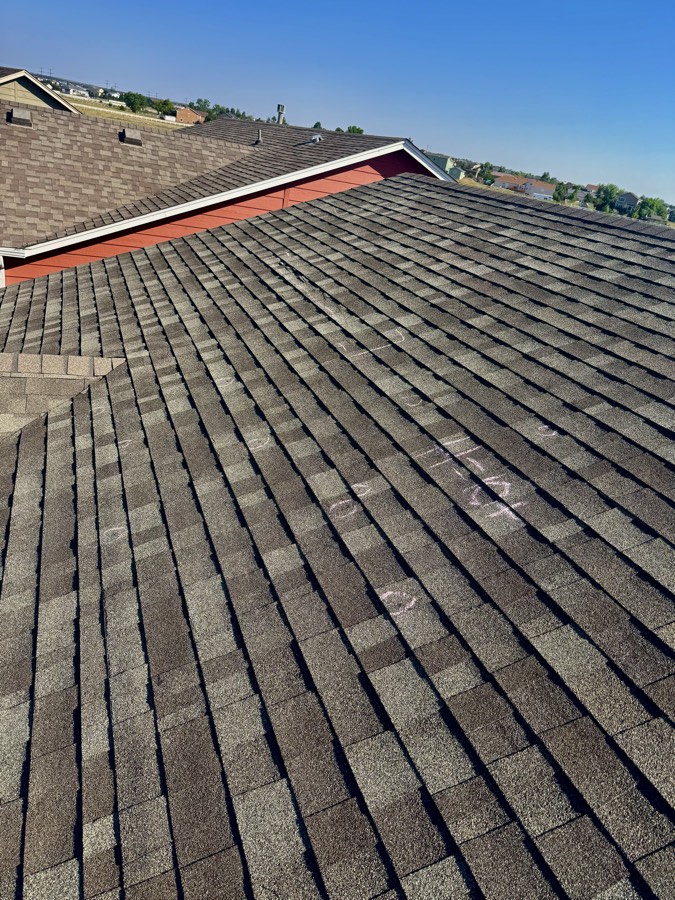
Hail damage vs. normal wear
Insurance covers sudden storm damage, not normal aging, so the difference matters. Hail impacts are usually random and scattered across a slope and often concentrated on the side facing the storm. Normal wear tends to be more uniform: overall granule loss, curling, or blistering spread across the roof. A trained inspector can tell the difference and document it with photos.
Why you shouldn't wait
- Damage gets worse. Bruised shingles lose granules faster and can start leaking a season or two later.
- Claims have deadlines. Many policies limit how long after a storm you can file. Check yours, and get documentation while the damage is fresh.
- Hidden leaks cause hidden damage. Slow leaks can soak insulation and decking long before a stain shows on the ceiling.
What to do after a hail storm
- Write down the date of the storm and take photos of any damage you can see from the ground.
- Schedule a free roof inspection. We'll document what we find with photos and explain it in plain language.
- If there's damage worth claiming, we'll help you file and handle the process from there. See how a roof insurance claim works in Colorado.
Learn more about our hail damage and insurance claim services.